
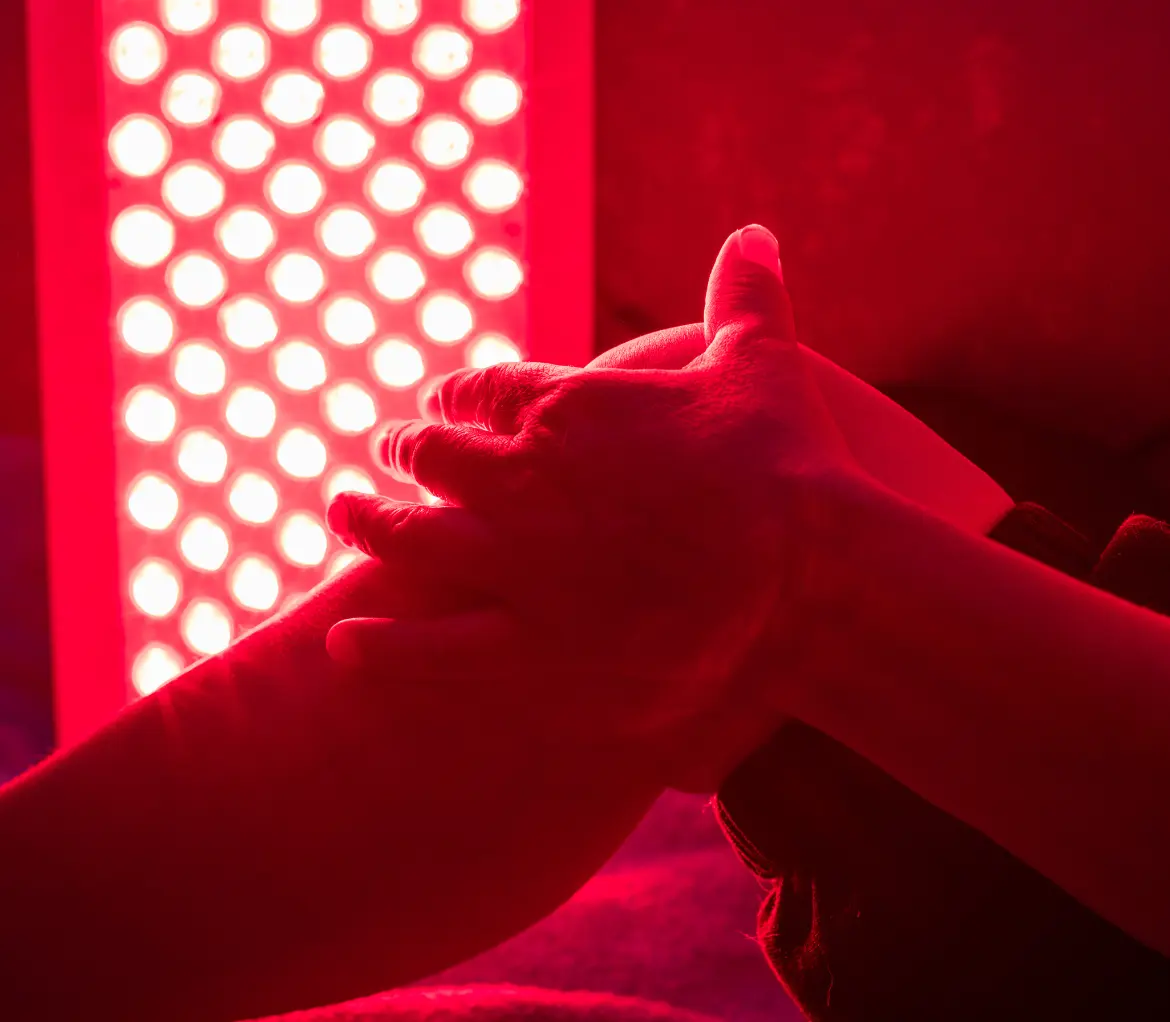
Over the last few years, red light therapy has become one of the biggest trends in the recovery and wellness industry. From professional athletes and sports teams to gyms, recovery studios and social media influencers, it is now being promoted to improve recovery, reduce inflammation and speed up healing.
At Origin Physiotherapy, we are always interested in new recovery tools and technologies, but we also believe it is important to separate strong evidence from strong marketing.
So, is red light therapy genuinely useful, or is it simply another wellness trend?
Light plays more of a role in our biological systems than we often give it credit for, from sleep-wake cycles and our circadian rhythm to absorption of vitamins. Red light therapy, also known as photobiomodulation, uses specific wavelengths of red and near-infrared light that are thought to penetrate the skin and interact with cells within the body. Research suggests this light may influence the mitochondria, the ‘powerhouse of the cell”, to give you a throwback to school biology, to increase energy production, blood flow, and reduce inflammatory processes (Dompe et al., 2020).
Importantly, this means that there is a scientific underpinning behind the concept. Red light therapy, therefore is not simply “made up” or pseudoscience. However, that does not automatically mean all the claims made online are accurate.
The current evidence is best described as promising, but still developing.
Some studies have shown potential benefits for improving muscle soreness, recovery following exercise, temporary pain reduction and aspects of tissue healing. Systematic reviews have suggested that red light therapy may help reduce delayed onset muscle soreness (DOMS) and improve perceived recovery following training (Ferraresi., 2016). However, the quality of research varies considerably, with different studies using different devices, treatment times and light intensities, making it difficult to draw firm conclusions. More recent systematic reviews show no benefits for exercise or recovery (Álvarez-Martínez & Borden., 2025).
This is where social media can sometimes become misleading.
Red light therapy is often marketed as a miracle recovery tool capable of dramatically accelerating healing, boosting testosterone, reversing ageing or “detoxifying” the body. At present, there is very limited high-quality evidence supporting many of these stronger claims.
Our view at Origin Physiotherapy is that red light therapy may have a role as an additional recovery tool, particularly within sport and exercise settings, but it should not replace the foundations of recovery and rehabilitation. Good sleep, appropriate training load, progressive strength work, nutrition and well-structured rehabilitation remain far more important than any single recovery gadget or trend, which has been termed collectively as the ‘icing on the cake’ (Driller & Leabeater., 2023).
In other words, red light therapy may offer a small additional benefit for some people, but it is unlikely to be the thing that transforms recovery on its own.
As research continues to evolve, we expect to learn much more about where this technology may genuinely fit within healthcare, sport and rehabilitation. For now, the evidence suggests it is neither a miracle cure nor complete nonsense… but somewhere in the middle. We are committed to staying up to date with clinical research and helping you to stay informed about your recovery journey, so we will monitor the literature to keep you up to date!
References:
Álvarez-Martínez, M., & Borden, G. (2025). A systematic review on whole-body photobiomodulation for exercise performance and recovery. Lasers in Medical Science, 40(1), 55.
Driller, M., & Leabeater, A. (2023). Fundamentals or icing on top of the cake? A narrative review of recovery strategies and devices for athletes. Sports, 11(11), 213.
Dompe, C., Moncrieff, L., Matys, J., Grzech-Leśniak, K., Kocherova, I., Bryja, A., … & Dyszkiewicz-Konwińska, M. (2020). Photobiomodulation—underlying mechanism and clinical applications. Journal of clinical medicine, 9(6), 1724.
Ferraresi, C., Huang, Y. Y., & Hamblin, M. R. (2016). Photobiomodulation in human muscle tissue: an advantage in sports performance?. Journal of biophotonics, 9(11-12), 1273-1299.


